
How to Navigate a Roofing Insurance Claim After a Storm in Charlotte, NC
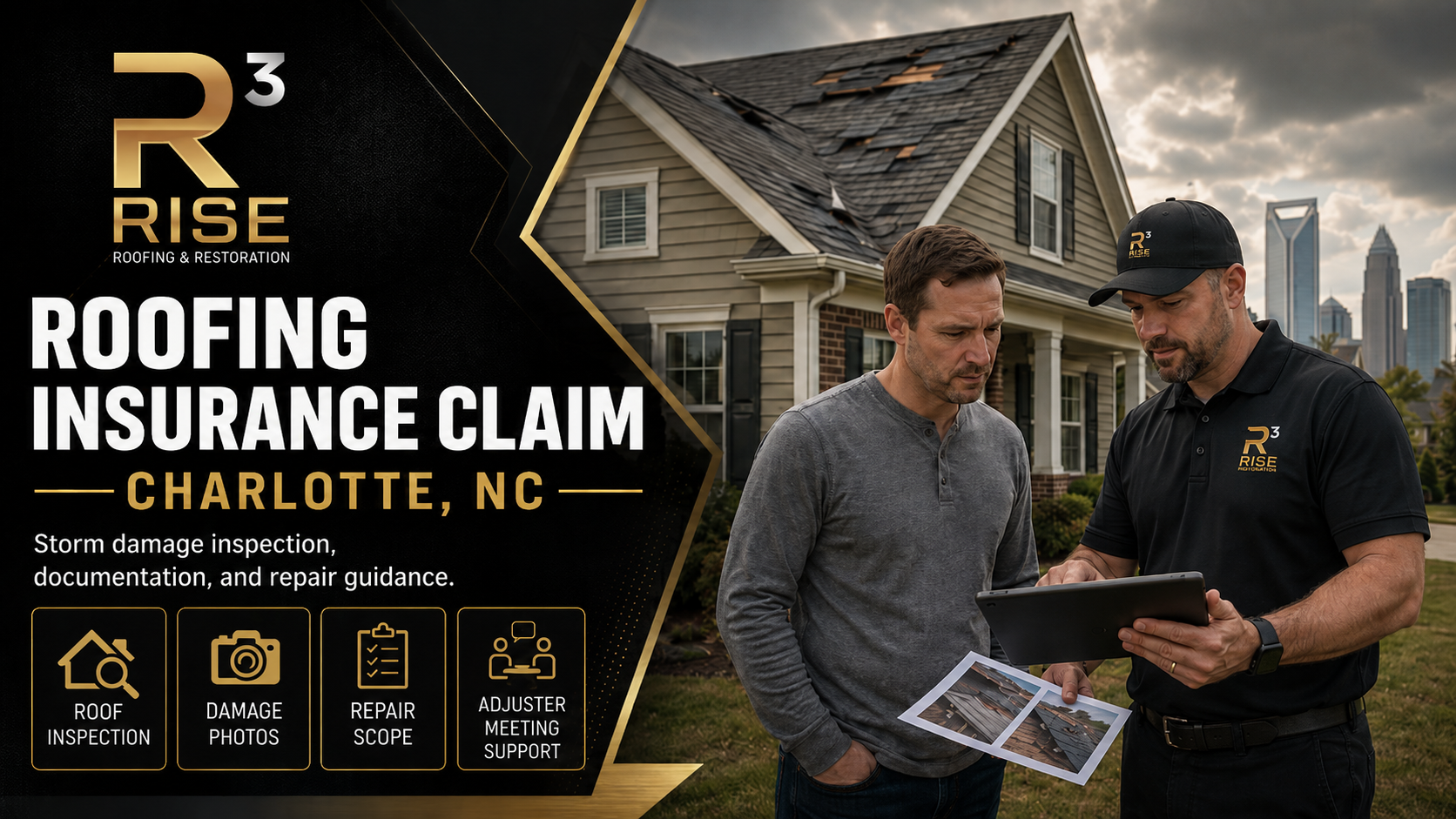
Living in Charlotte, we’re used to the weather keeping us on our toes. One day it’s a beautiful afternoon in University City, and the next, a massive thunderstorm is rolling through Pineville, bringing wind and hail along with it. While these storms are just a part of life in North Carolina, they can leave behind some pretty serious headaches for homeowners, specifically when it comes to your roof.
If you’ve recently walked outside after a storm and noticed shingles in your yard or dents in your gutters, you’re likely wondering what comes next. Dealing with insurance can feel like a part-time job you never applied for. That’s why we’ve put together this guide to help you navigate the roofing insurance claim process here in Charlotte, NC.
At RISE Roofing & Restoration, we’ve helped countless neighbors through this exact situation. While we don't negotiate claims or interpret your specific policy, we can provide the professional documentation and technical support you need to make the roofing side of things as smooth as possible.
Step 1: Safety First and Your Initial Ground Assessment
Before you even think about calling an insurance company, take a breath and stay safe. Never climb onto your roof yourself, especially right after a storm when surfaces might be slippery or shingles could be loose.
Start by walking around your property. Look for "collateral damage" on the ground. In neighborhoods like Myers Park or Dilworth, heavy tree cover means you might see fallen limbs.
Check for:
- Shingles or pieces of shingle tabs in the yard or driveway
- Dents in your gutters, downspouts, or window screens
- Granules (they look like coarse sand) piling up at the bottom of your downspouts
- Damage to your siding, fence, or even your mailbox
If you see these signs, there’s a good chance your roof took a hit too. If you have an active leak inside, like a water spot on the ceiling in an upstairs bedroom, move your furniture and place a bucket under the drip immediately to mitigate further damage.
Step 2: Get a Professional Inspection Before Filing
This is the most important step that many homeowners miss. It might seem natural to call your insurance agent the second you see a problem, but it’s often better to have a roofing professional look at the house first.
Why? Because filing a claim that gets denied can sometimes still count as a "claim" on your record. By starting with free roof inspections from a trusted local team like RISE Roofing & Restoration, you’ll know exactly what’s going on before you involve your carrier.
During our inspection, we look for:
Hail Damage
This often looks like small "bruises" or dark spots on the shingles where the protective granules have been knocked off.
Wind Damage
This includes lifted shingles, creased shingles (where the wind caught them and bent them back), or missing pieces.
Pipe Boot and Flashing Issues
Storms can often expose weaknesses in the seals around your roof vents and chimneys.
We document everything with photos. This way, if you do decide to move forward, you have a clear, honest report showing the visible damage. Remember, coverage decisions are always made by the insurance carrier, but having professional documentation helps ensure nothing is overlooked.
Step 3: Decoding Your Policy (RCV vs. ACV)
Once you’ve confirmed there is damage, you’ll want to pull out your insurance policy. In North Carolina, most homeowners have one of two types of coverage for their roof: Replacement Cost Value (RCV) or Actual Cash Value (ACV).
Understanding the difference is key to knowing what your out-of-pocket costs might look like for a roof replacement in Charlotte, NC.
Replacement Cost Value (RCV)
This is the most common coverage. With RCV, the insurance company typically pays the full cost to replace your roof at today’s prices, minus your deductible. They usually pay in two parts: an initial check (ACV) and a second check (the "recoverable depreciation") once the work is finished and invoiced.
Actual Cash Value (ACV)
With an ACV policy, the insurer pays what your roof is "worth" right now. If your roof is 15 years old, they will subtract the "depreciation" (the value lost over time) from the payout. You do not get that money back, meaning you’ll likely have to cover the difference yourself to get a full replacement.
Pro Tip
Check if you have a separate "Wind/Hail Deductible." Sometimes this is a flat dollar amount (like $1,000), but other times it’s a percentage of your home's total value, which can be much higher.
Step 4: File Your Claim Promptly
If the damage is significant enough to warrant a claim, don't wait. North Carolina policies usually have a specific "notice of loss" window, often one year from the date of the storm, but sometimes less.
When you call your carrier's claims line, have your storm date ready. Tell them you've had a professional inspection and that you have documented wind or hail damage. They will assign you a claim number and an insurance adjuster.
Step 5: The Adjuster Visit and Technical Assistance
The insurance company will send out an adjuster to verify the damage. This is a critical moment in the process. We always recommend having your roofing contractor present during this visit.
When we meet an adjuster on-site, we provide "technical assistance." We aren't there to fight or argue; we’re there to make sure the adjuster sees exactly what we saw during our initial inspection. We can point out specific hail hits or wind-damaged shingles that might be hard to see from certain angles. This collaborative approach helps ensure the adjuster’s report is as accurate as possible.
Step 6: Choosing the Right Solution
After the adjuster’s visit, you’ll receive an estimate from the insurance company. If they approve the claim, you’ll need to decide on the best path forward. Depending on the extent of the damage, this might mean a targeted roof repair in Charlotte, NC, or a full replacement.
If a full replacement is approved, this is your chance to upgrade your home’s protection and curb appeal. At RISE Roofing & Restoration, we specialize in high-quality architectural shingles that are built to withstand the humid, stormy climate of the Queen City.
We’ll walk you through material options, colors, and the timeline for the project. Our goal is to make the actual construction phase the easiest part of the whole process for you.
Local Expertise for Charlotte Homeowners
Navigating a storm damage insurance claim process shouldn't be something you have to do alone. Whether you’re in a quiet neighborhood in Ballantyne or a busy street in NoDa, your roof is your home’s first line of defense.
At RISE Roofing & Restoration, we take pride in being a reliable local partner. We believe in clear communication, honest assessments, and quality workmanship. If you suspect your roof was damaged in the last round of Charlotte storms, don't wait for a leak to tell you there's a problem.
Final Thoughts
Stay Safe
Look from the ground, but leave the climbing to the pros.
Act Fast
NC deadlines matter.
Know Your Policy
RCV vs. ACV changes your budget.
Partner Up
Having a professional by your side during the adjuster visit can make a huge difference.
If you’re ready to get started with a professional look at your roof, we’re here to help.
- Call RISE Roofing & Restoration at (704) 486-1348 to schedule your free roof inspection.
- Email info@riseroofingandrestoration.com to get started.
- Schedule a free roof inspection here.
FAQ
Does insurance cover a roof that is just old?
Generally, no. Insurance covers "sudden and accidental" damage like wind or hail. Normal wear and tear or age-related deterioration is typically the homeowner's responsibility.
Can I choose my own roofing contractor in North Carolina?
Yes. In NC, you have the right to choose any licensed and insured contractor you trust to perform the work on your home.
What if the insurance estimate is lower than the contractor's price?
This is common. Often, the initial estimate misses specific local building codes or material quantities. We can provide a supplement with documentation and photos to the insurance company to explain why additional costs are necessary for a proper installation.